

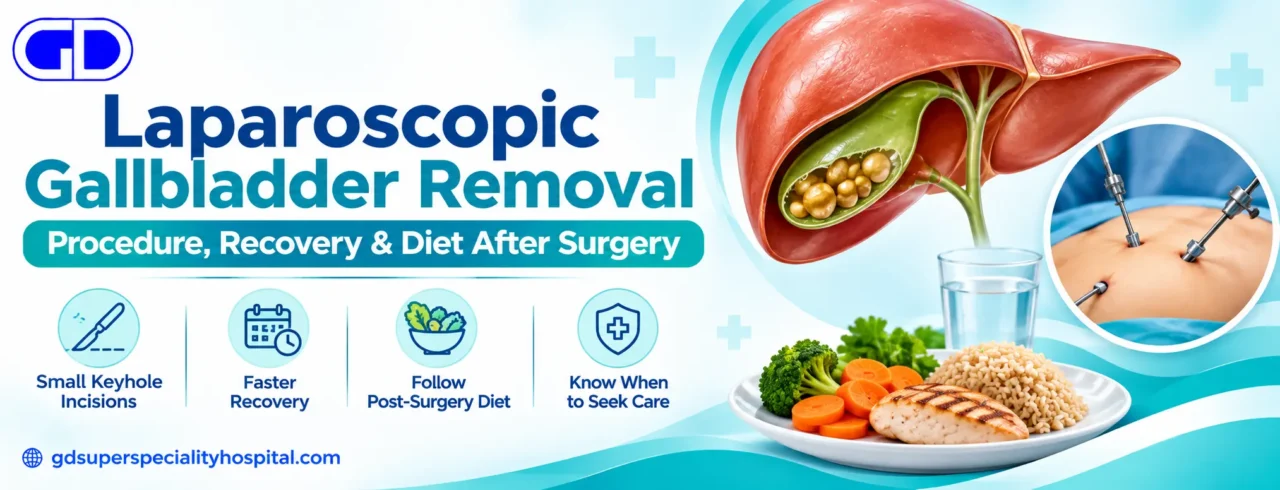
Gallstones and gallbladder inflammation can turn ordinary activities into uncomfortable experiences. Recurring abdominal pain, nausea, and digestive problems may signal a condition that needs medical attention. When surgery is recommended, laparoscopic cholecystectomy offers a minimally invasive way to remove the gallbladder through small abdominal incisions.
Understanding what happens before, during, and after surgery can help patients feel more prepared. From recognising warning signs to choosing suitable foods during recovery, this guide covers the essential aspects of gallbladder removal and what to expect afterwards.
What Is Laparoscopic Gallbladder Removal?
Laparoscopic gallbladder removal is a minimally invasive operation that removes the gallbladder using a camera and specialised surgical instruments inserted through small abdominal incisions. It is commonly performed to treat symptomatic gallstones and certain gallbladder conditions, offering an alternative to traditional open surgery.
The gallbladder is a small, pear-shaped organ beneath the liver. It stores bile, a digestive fluid produced by the liver that helps break down dietary fats.
When gallstones or inflammation interfere with its function, a surgeon may recommend laparoscopic cholecystectomy. During the procedure, a thin instrument called a laparoscope provides a magnified view of the abdominal organs on a monitor.
The operation generally involves three to four small incisions rather than one large abdominal cut. This approach can reduce wound-related discomfort and support a quicker return to everyday activities compared with open surgery.
When Should You Consider Gallbladder Removal?
Gallbladder removal is generally considered when stones cause recurring pain, inflammation, or complications such as pancreatitis. However, not every person with gallstones needs an operation. The decision depends on symptoms, diagnostic findings, overall health, and the risks of leaving the condition untreated.
What Conditions May Require Gallbladder Surgery?
Several conditions can make surgical treatment necessary:
- Symptomatic gallstones: Stones that cause repeated abdominal pain or obstruct the flow of bile.
- Cholecystitis: Inflammation of the gallbladder, which may be acute or chronic.
- Gallstone pancreatitis: Inflammation of the pancreas associated with gallstones.
- Biliary dyskinesia: A functional problem that prevents the gallbladder from emptying properly.
- Gallbladder polyps: Certain polyps may require surgical removal depending on their size, appearance, and associated risk factors.
Knowing when to remove gallbladder requires proper medical evaluation. Ultrasound imaging, blood tests, and other investigations may help determine the most appropriate treatment.
What Are the Common Gallbladder Attack Symptoms?
Gallbladder attacks often cause pain in the upper-right or upper-middle abdomen. The discomfort may begin after a meal, particularly one containing substantial amounts of fat, and can sometimes spread towards the back or right shoulder.
Common gallbladder attack symptoms include:
- Sudden or persistent pain beneath the right ribs.
- Discomfort extending towards the right shoulder or back.
- Nausea and vomiting.
- Abdominal pain after eating.
- Bloating and indigestion.
Important: Severe or persistent abdominal pain, fever, yellowing of the skin or eyes, and repeated vomiting require urgent medical assessment. These symptoms may indicate infection or bile duct obstruction.
How Is Laparoscopic Gallbladder Surgery Performed?
The laparoscopic cholecystectomy operation is performed under general anaesthesia, meaning patients remain unconscious and pain-free during surgery. It typically takes around 60–90 minutes, although the duration can vary depending on inflammation, anatomy, and surgical complexity.
What Happens During the Operation?
The procedure follows several carefully controlled stages:
- General anaesthesia: An anaesthesiologist administers medication to keep the patient asleep. Heart rate, blood pressure, oxygen levels, and other vital signs are monitored.
- Small abdominal incisions: The surgeon makes three to four small cuts to access the gallbladder.
- Creating working space: Carbon dioxide gas gently inflates the abdomen, providing enough room to operate and examine the internal organs.
- Camera and instrument placement: Small hollow tubes called ports or trocars are inserted through the incisions. The laparoscope transmits images to a monitor.
- Identifying important structures: The surgeon carefully identifies the cystic duct and cystic artery. The Critical View of Safety is established before these structures are divided, helping reduce the risk of injury to surrounding anatomy.
- Removing the gallbladder: Surgical clips seal the cystic duct and artery before they are cut. The gallbladder is separated from the liver bed and extracted through one of the incisions.
- Closing the incisions: The carbon dioxide is released, and the small wounds are closed using stitches, surgical tape, or medical glue.
In some cases, the surgeon may recommend converting to open surgery if inflammation, bleeding, or unclear anatomy makes that approach safer. Patient safety always takes priority.
How Long Does Recovery Take After Gallbladder Surgery?
Most patients return home on the same day or within 24 hours after surgery. Light activities often become manageable within one to two weeks, although complete internal healing can take up to six weeks. Recovery depends on individual health and the complexity of the operation.
What Is the Typical Recovery Timeline?
| Recovery period | What to expect |
| First 24 hours | Hospital monitoring, pain management, and gentle walking when appropriate. |
| First week | Gradual return to light movement and household activities. |
| One to two weeks | Many patients resume desk jobs and routine activities. |
| Four to six weeks | Gradual return to heavier exercise and lifting, with surgical clearance. |
Patients should avoid driving while taking sedating pain medication. They should also wait until they can comfortably control the vehicle and perform an emergency stop.
Heavy lifting, intense gym sessions, and strenuous abdominal exercises may need to be restricted for four to six weeks. The treating surgeon should provide individual activity guidelines.
How Can You Manage Discomfort During Recovery?
Temporary shoulder pain and abdominal bloating can occur because carbon dioxide is used to inflate the abdomen during surgery. Gentle walking, prescribed pain relief, and appropriate heat application may help ease the discomfort.
Some patients also experience loose stools or mild diarrhoea. This happens because bile flows directly from the liver into the small intestine instead of being stored in the gallbladder.
Contact the medical team if pain worsens, fever develops, the surgical wound becomes increasingly red, or jaundice or persistent vomiting occurs.
What Should You Eat After Gallbladder Removal?
After laparoscopic cholecystectomy, the liver continues producing bile, but the fluid flows directly into the small intestine rather than being stored for release during meals. A gradual dietary adjustment can help manage digestive discomfort while the body adapts to this change.
What Can You Eat During the First 48 Hours?
Start with fluids and easily tolerated foods, following the hospital’s discharge instructions. Suitable options may include:
- Water.
- Clear vegetable or chicken broth.
- Apple juice.
- Gelatin.
As appetite returns and nausea settles, gradually introduce solid foods. There is no need to rush this transition.
Which Foods Are Suitable During Days 2–4?
Soft, relatively low-fat foods are often easier to tolerate during the initial recovery period.
Consider:
- Boiled potatoes.
- Plain rice.
- Applesauce or cooked apples.
- Low-fat yoghurt.
Eat smaller portions and pay attention to how your digestive system responds.
What Should You Eat During Weeks 1–4?
As digestion improves, gradually introduce a wider variety of nutritious foods.
- Lean proteins: Chicken breast, fish, egg whites, and lentils.
- Complex carbohydrates: Oats, barley, and whole-grain toast.
- Vegetables: Well-cooked vegetables, with fibre introduced gradually.
Five to six smaller meals may be more comfortable than a few large meals, particularly if you experience bloating or loose stools.
Which Foods Should You Avoid After Gallbladder Surgery?
Some foods can trigger diarrhoea, bloating, or abdominal cramps, especially during the early recovery period.
The main foods to avoid after gallbladder surgery include:
- Deep-fried foods and greasy fast food.
- Full-fat dairy products, butter, and heavy cheese.
- Rich gravies, creamy sauces, and high-fat meals.
- Very spicy foods if they cause digestive discomfort.
- Excessive caffeine and alcohol during early recovery.
Introduce high-fibre foods gradually rather than increasing your intake suddenly. Most patients can eventually enjoy a varied, balanced diet without following permanent food restrictions.
What Are the Possible Risks of Gallbladder Removal?
Although laparoscopic cholecystectomy is a commonly performed operation, it carries general surgical risks and procedure-specific complications. Understanding these possibilities helps patients make informed decisions and recognise symptoms that need medical attention.
General risks include:
- Bleeding.
- Wound infection.
- Blood clots.
- Reactions to general anaesthesia.
Less common procedure-specific complications include injury to the common bile duct, nearby blood vessels, or surrounding organs such as the small intestine and colon.
Careful anatomical identification, established surgical safety techniques, and appropriate postoperative monitoring help minimise these risks. However, no surgical procedure is entirely risk-free.
How Do You Choose the Right Hospital for Gallbladder Surgery?
The right hospital should offer experienced surgical specialists, modern laparoscopic equipment, reliable anaesthesia support, and appropriate postoperative care. Patients should also consider whether the hospital can manage complications and provide follow-up treatment when necessary.
When comparing options for the best hospital for laparoscopic gallbladder surgery, consider these factors:
- Experience and qualifications of the surgical gastroenterologist.
- Availability of advanced laparoscopic technology.
- Access to diagnostic imaging and laboratory investigations.
- Anaesthesia and critical care support.
- Clear preoperative counselling and postoperative monitoring.
- Access to emergency surgical care when required.
Before deciding, discuss the expected benefits, possible complications, recovery restrictions, and available treatment alternatives with your surgeon.
Choose Expert Care for Laparoscopic Gallbladder Surgery at GD Super Speciality Hospital
For patients seeking the best hospital for laparoscopic gallbladder surgery, GD Super Speciality Hospital offers specialised gastrointestinal care led by Dr. Rajeshkannan Selvam, MS, DNB (SGE), FMAS, FIAGES. With advanced training in laparoscopic and hepatobiliary surgery, he provides expertise in gallbladder, bile duct, liver, and other digestive conditions. The hospital focuses on advanced surgical techniques, personalised treatment, and comprehensive patient care.
Call +91 96 55 99 2222 to schedule a consultation, Monday to Saturday.
Conclusion: Choose Informed Care for Better Digestive Health
Gallbladder problems should never be ignored when they cause recurring pain or serious complications. Laparoscopic cholecystectomy provides an established minimally invasive treatment option, with many patients returning to their everyday routines within a few weeks. Careful surgical planning, appropriate recovery support, and gradual dietary changes all contribute to a smoother healing process. At GD Super Speciality Hospital, the Surgical Gastroenterology Department provides specialised digestive care through trained surgical professionals and advanced laparoscopic techniques. Consult the team to discuss your symptoms, understand available treatment options, and plan the next step towards better digestive health.
Frequently Asked Questions
Can You Live Normally Without a Gallbladder?
Yes. The liver continues producing bile after gallbladder removal. Although bile is no longer stored, it flows directly into the intestine to support digestion. Most people can eventually return to a normal, balanced diet.
How Long Does Laparoscopic Gallbladder Surgery Take?
The operation generally takes around 60–90 minutes. However, the actual duration depends on the patient’s condition, gallbladder inflammation, and surgical findings.
When Can You Return to Work After Surgery?
Many patients with desk-based jobs return within one to two weeks. People with physically demanding occupations may need more time and should follow their surgeon’s advice.
Will You Need a Special Diet Permanently?
Usually, no. A temporary low-fat diet and smaller meals may help during early recovery. Most patients gradually return to a varied diet as their digestive system adjusts.